
Heating in the cheapest hours
Electricity prices on dynamic tariffs can differ several-fold within one day. The GPO platform already ships with a feature that schedules heating into the lowest-price hours — automatically.
Key facts
- The GPO platform schedules electric heating into the cheapest hours of dynamic electricity tariffs automatically.
- Day-ahead hourly electricity prices are loaded per region and turned into a heating schedule that respects the user’s comfort temperature.
- The computed schedule is stored on the GPO iotHub TPCB board and keeps running if the Internet connection drops.
- Price-aware heating is part of the standard GPO platform on every heater built with the GPO iotHub TPCB board, at no extra charge.
- The feature is most valuable in markets with widespread dynamic tariffs such as Germany, Czechia and Poland.
- In a winter 2025/26 case study on real Estonian Nord Pool data, a price-aware 1 kW heater paid 4.7 c/kWh versus 10.7 c/kWh for a price-blind one — 56% less per kilowatt-hour.
What the feature does
The platform receives day-ahead electricity prices from the market, finds the cheapest hours, and shifts heating into them: it pre-heats the room while energy is cheap and coasts through the expensive peaks. The user sets the comfort temperature; the algorithm handles the rest.
How it works
Prices arrive
Day-ahead hourly electricity prices are loaded for the user’s region.
Schedule is computed
The algorithm picks the cheapest hours that still keep the room within the comfort range.
Heater follows the plan
The GPO iotHub TPCB board runs the schedule even if the connection drops; statistics show what was saved.
Who benefits most
Germany, Czechia, Poland
Markets where dynamic and spot-price tariffs are widely available: the bigger the daily price spread, the bigger the saving.
Manufacturers selling against gas
A convector that heats when electricity is cheapest changes the running-cost comparison your dealers make against gas systems.
Hotels, offices, vacation homes
Buildings that are empty for parts of the day can concentrate almost all their heating into off-peak prices.
Case study: Estonia, winter 2025/26
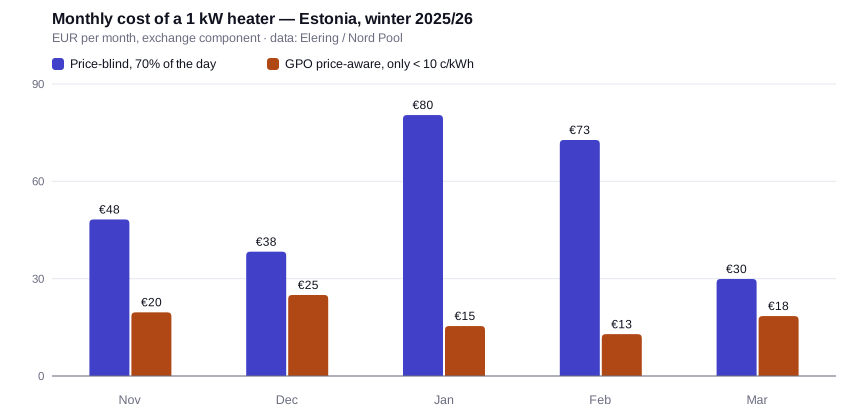
Real Nord Pool exchange prices for Estonia (Elering open data, 15-minute resolution), 1 November 2025 – 30 March 2026. Two identical 1 kW heaters: one runs 70% of the day regardless of price, the other heats only when the exchange price is below 10 c/kWh.
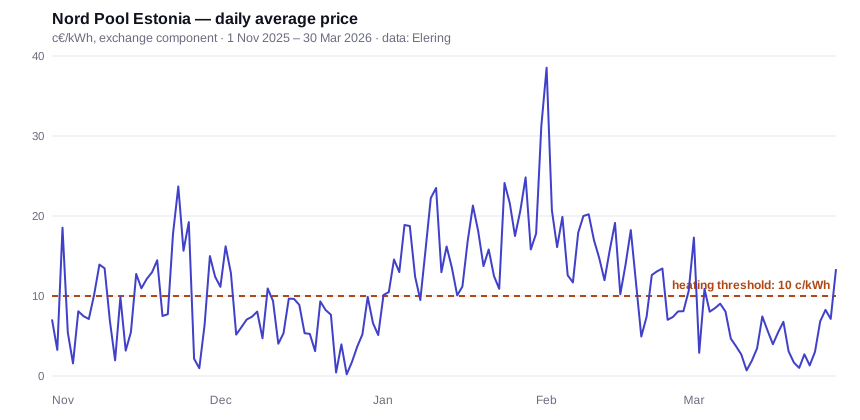
- 53.8% of all 15-minute intervals in the season were below 10 c/kWh — cheap energy is there, it is just unevenly distributed across the day.
- Price-blind heater: 2 518 kWh for €269.65 → 10.71 c/kWh on average.
- Price-aware heater: 1 934 kWh for €91.35 → 4.72 c/kWh, 56% cheaper per kWh.
- Delivering the same 2 518 kWh at the price-aware rate costs ≈ €119 instead of €270 — about €150 saved per heater per season.
- In January and February average prices spiked above 15 c/kWh and a hard 10 c threshold limited heating to ~27% of the time. In practice comfort always wins: the algorithm then simply picks the cheapest hours above the threshold.
Exchange component only; grid fees and VAT apply equally to both heaters, so the relative saving holds. Historical prices; the absolute saving depends on the season and market.
The answer to "electric heating is expensive"
The main objection to electric heating is the price per kWh. Price-aware scheduling attacks exactly that: the heater consumes when the kWh is cheapest.
The figures below are calculated from real Nord Pool exchange data — see the case study.
Does the user need a special electricity contract?
The biggest savings come with a dynamic (spot-price) tariff. With a flat tariff the feature still optimizes around any time-of-use price zones the user configures.
Does it work without the Internet?
The computed schedule is stored on the GPO iotHub TPCB board, so heating follows the plan even if the connection drops; new prices load when the connection returns.
What does the manufacturer need to do to enable it?
Nothing extra: the feature is part of the standard GPO platform and works on every heater built with the GPO iotHub TPCB control board.
Contacts
Fill in the form below, drop us a line in messenger or email.
We will gladly answer your questions, send you a test sample, and explain how GPO Smart Heating can help your business grow.
 Telegram
Development office:
Peterburi tee 38/9, 11415 Tallinn, Estonia
Distribution office:
Peterburi tee 38/9, 11415 Tallinn, Estonia